
Sandymount Martello Tower

Sandymount Martello Tower
REVIVING A LANDMARK ATTRACTION
The Martello Tower (in private ownership) was built in 1805 and is one of Sandymount’s more identifiable landmarks. It represents an enormous opportunity to create a unique civic space and act as a central congregation point along the Promenade.
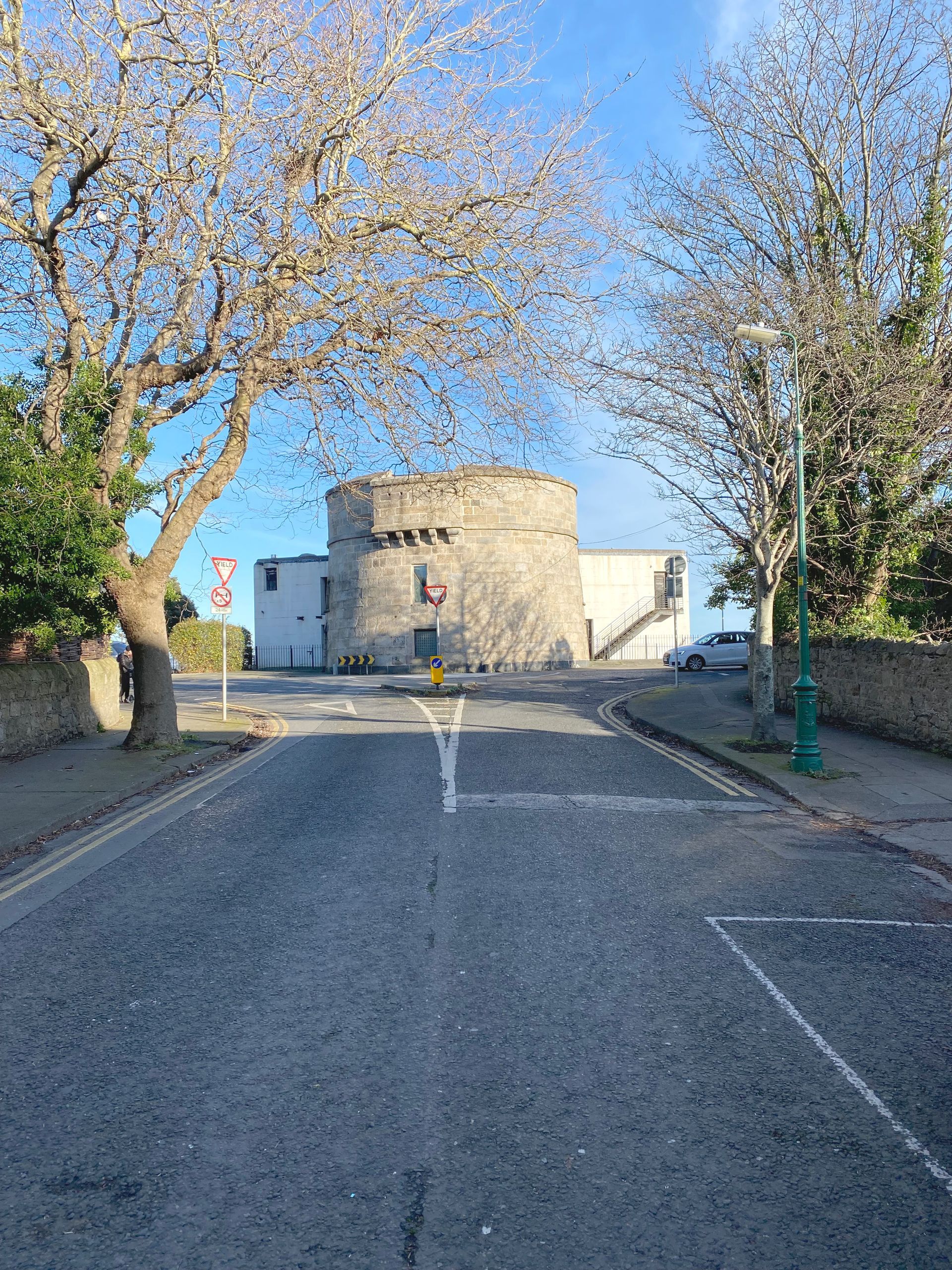
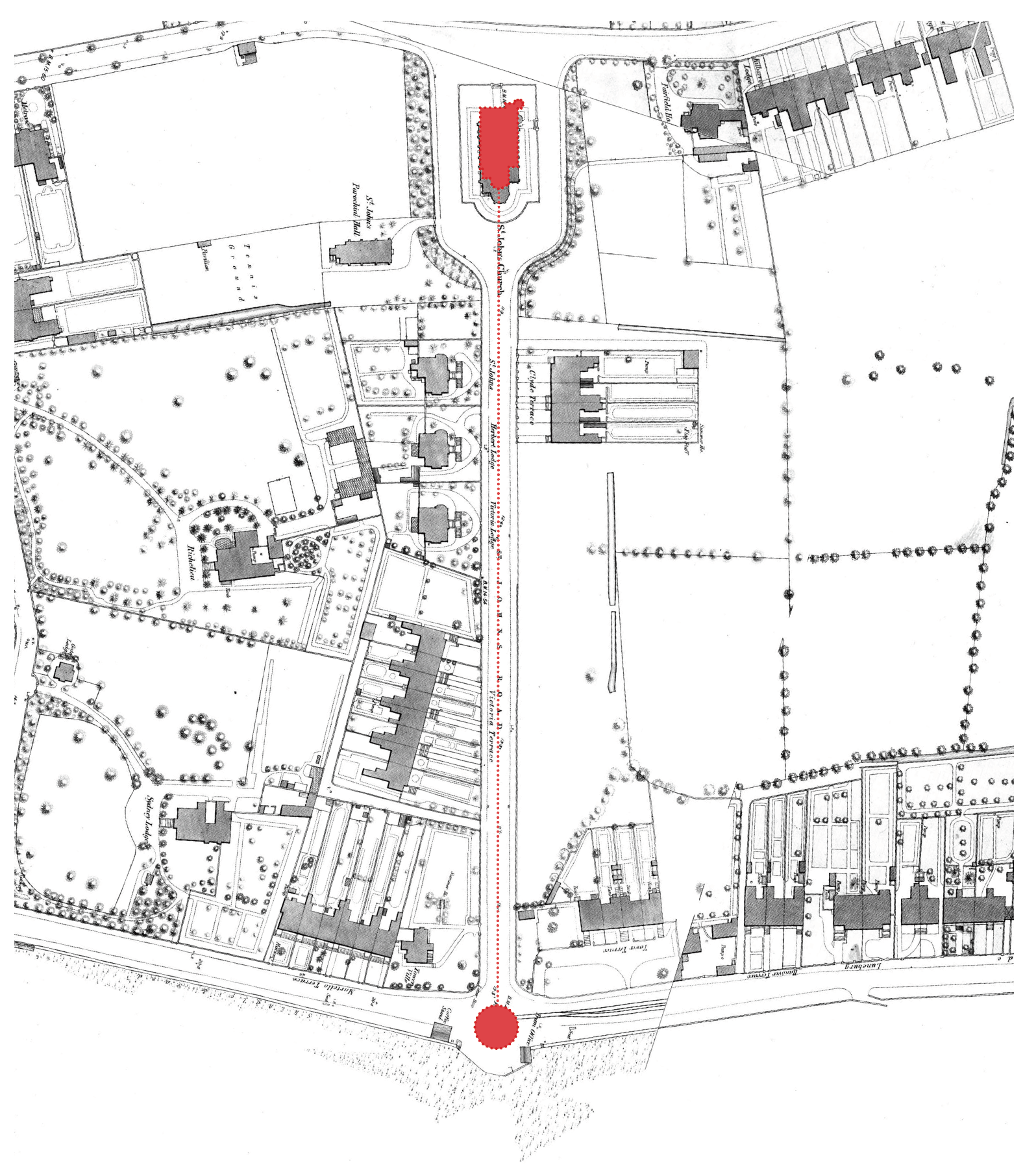
It is one in a chain of Martellos that skirt Dublin Bay and identify its coastal villages. The Martello public profile has receded in recent years, however it has great potential as a central focus on the promenade. It is on a planned axial route with St. John’s Church, linking Park Avenue with the Strand.
In the current context, the Martello sits adjacent the busy nexus of one of the Strand’s car parks, a bring centre and the petrol station across the road. It is a location on the Promenade that already has an active character that can be bolstered by offering greater facility and amenity to visitors.
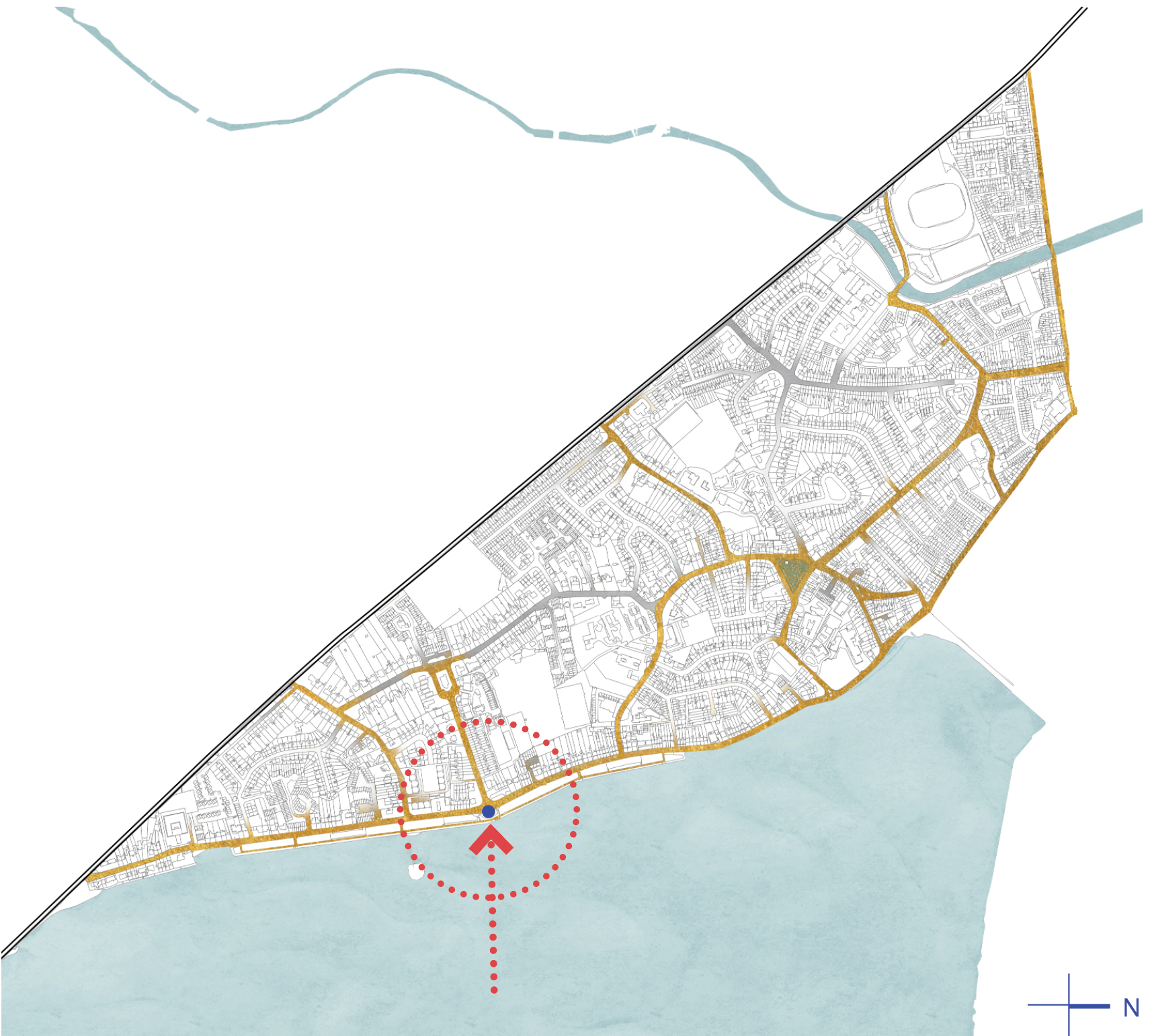
This can be achieved by
- enhancing surfaces around the Martello Tower; resurfacing with hardscaping while retaining the existing trees that buffer traffic from the Strand Road.
- creating two pedestrian crossings across the Strand Road to the space around the Martello Tower.
- intensively planting the sunken area, within the retaining wall encircling the Martello Tower, for greater biodiversity and habitat creation.
- including more bicycle parking to the edge of the existing car park for active travel.
- Increasing the number of benches at this busy point along the promenade.
- site-specific enclosures that accommodate the recycling bins, storage for sand bags and that also integrates entrance barrier; consolidating solutions that are currently more pragmatically arranged into a composed, discreet arrangement appropriate for a public civic space.
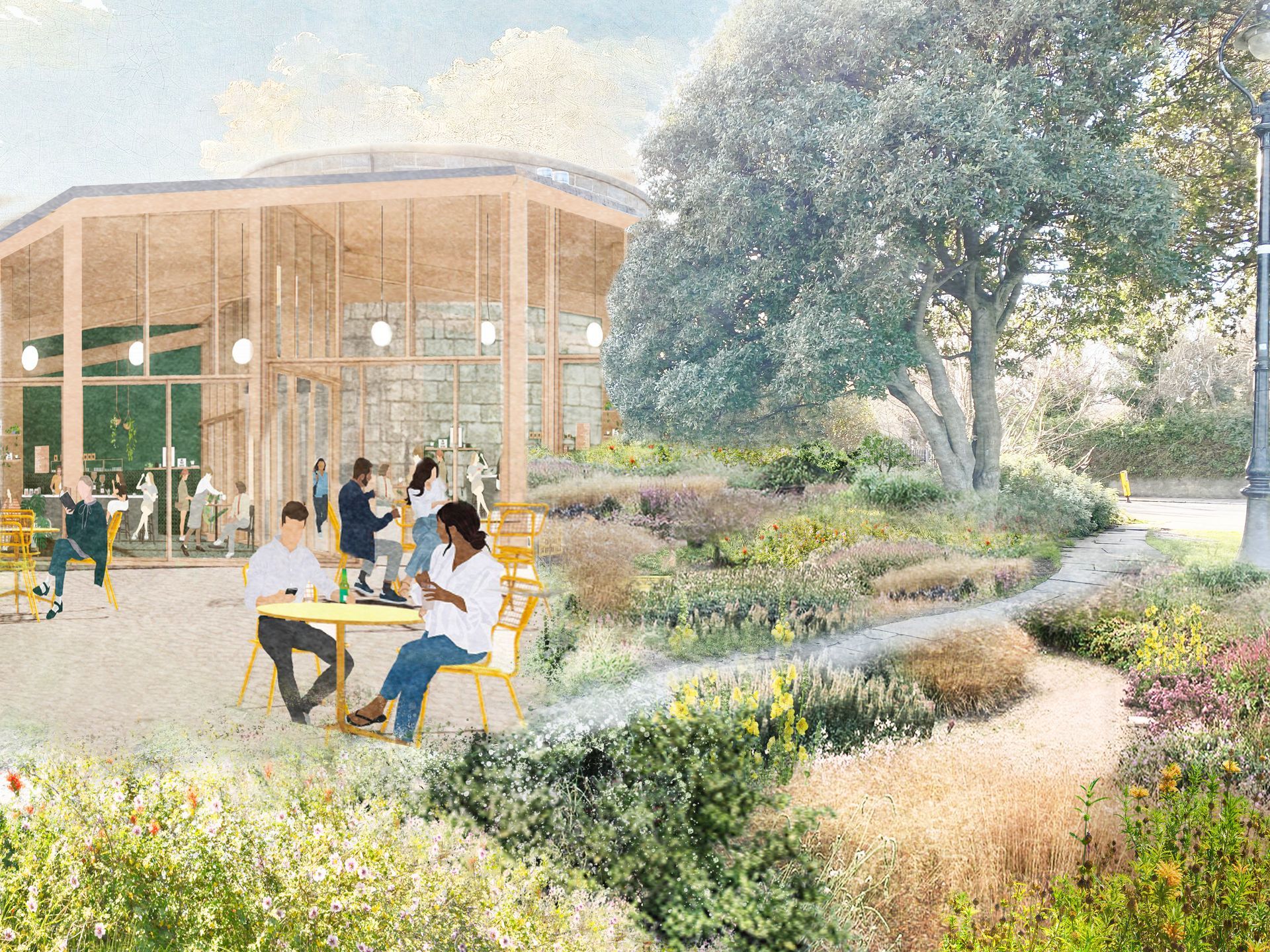
Imagined reinstated use for the Martello Tower
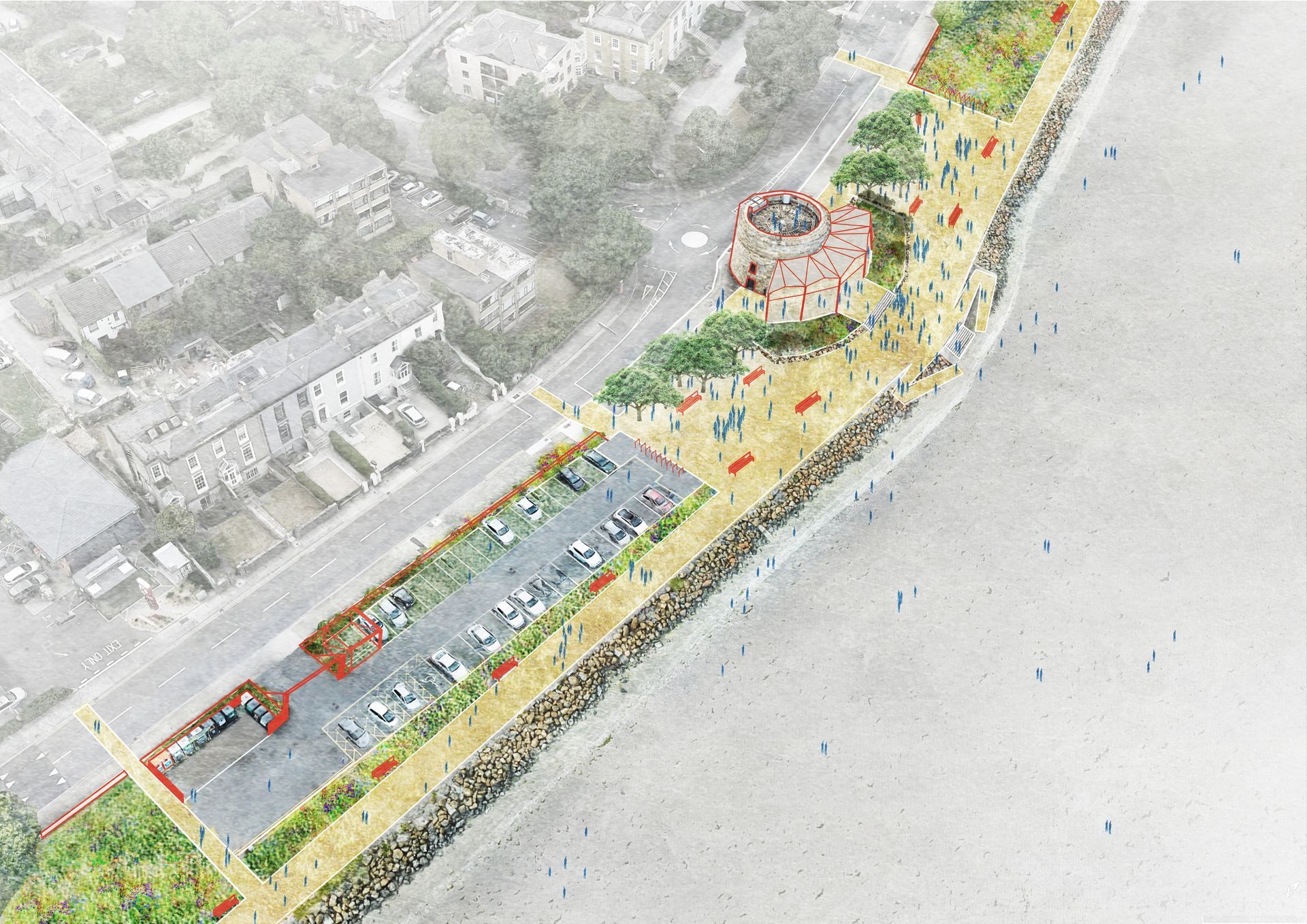
Imagined reinstated use for the Martello Tower
The Martello Tower currently has a sunken garden, retained by boulders with a steel guarding on top. This could be transformed by more intensive planting into a zone for biodiversity that enhances the quality of the space. The existing 20th C. lean-to structures could be adapted to have an open façade for a publicly accessible use that enjoys the aspect over the bay, eg. a café. Opening up the volume for greater public transparency allows views both to the interior and to the outer panorama, while utilising the structure and footprint of the existing extension to create a significant public amenity space.
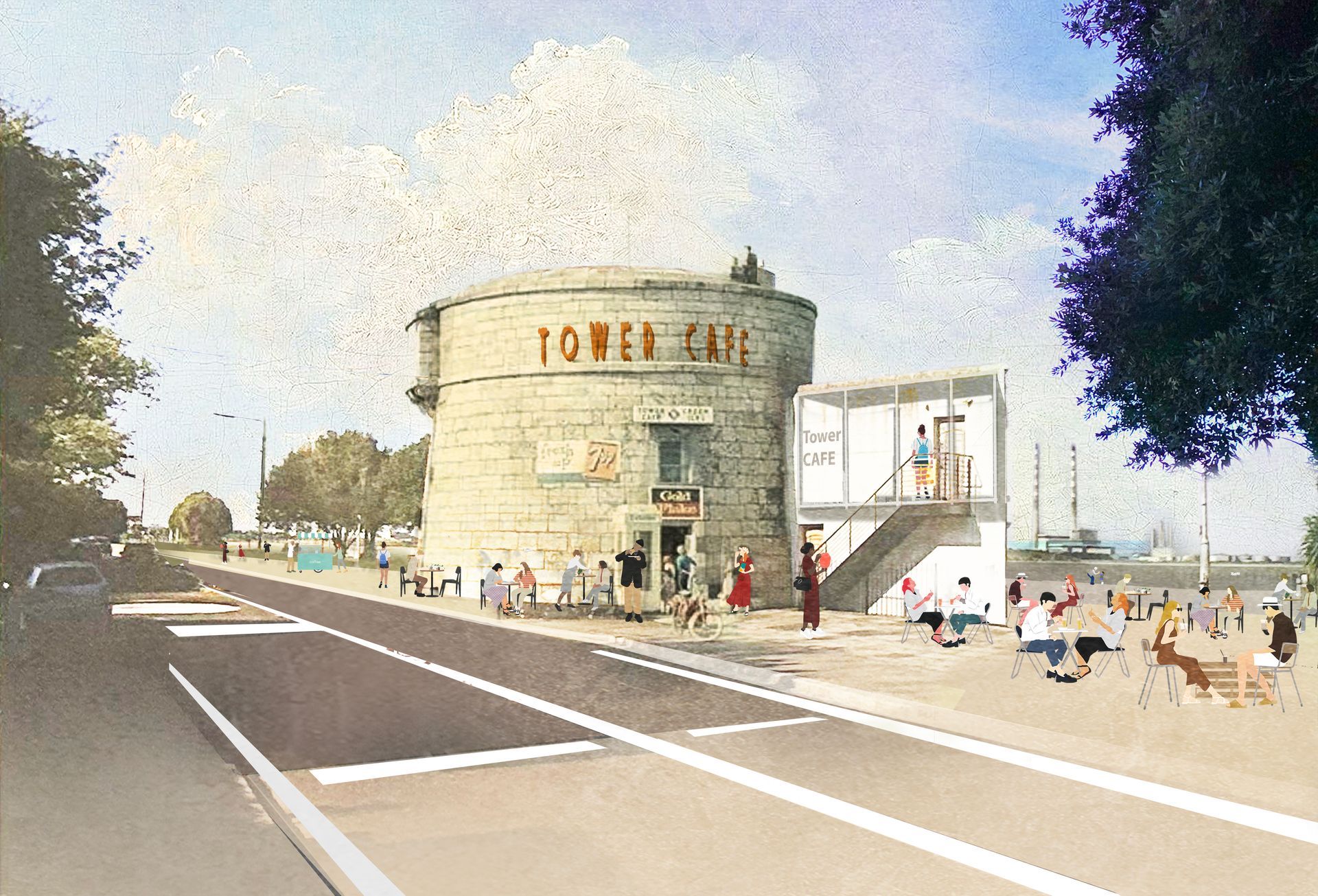
Imagined reinstated use for the Martello Tower
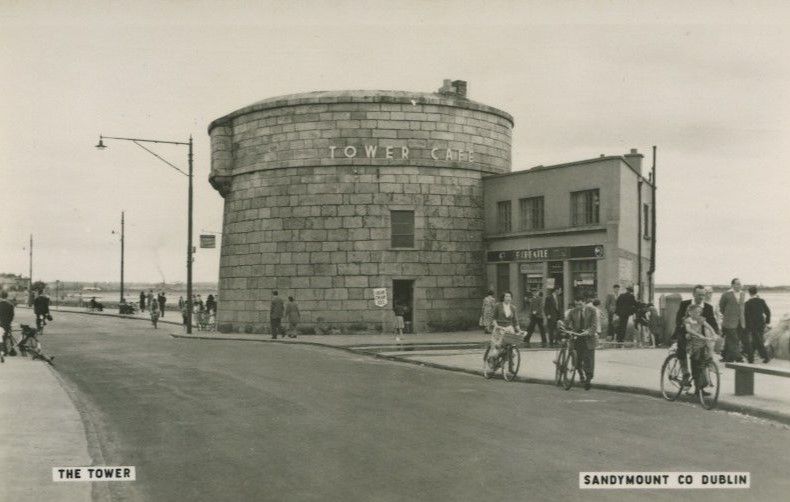
Historic image of the Martello Tower in use as a cafe
Historical photographs showing the original proximity between the Church and the waterfront which was then at the end of Leahy’s Terrace (water marked in blue).
Existing view of the Martello Tower.
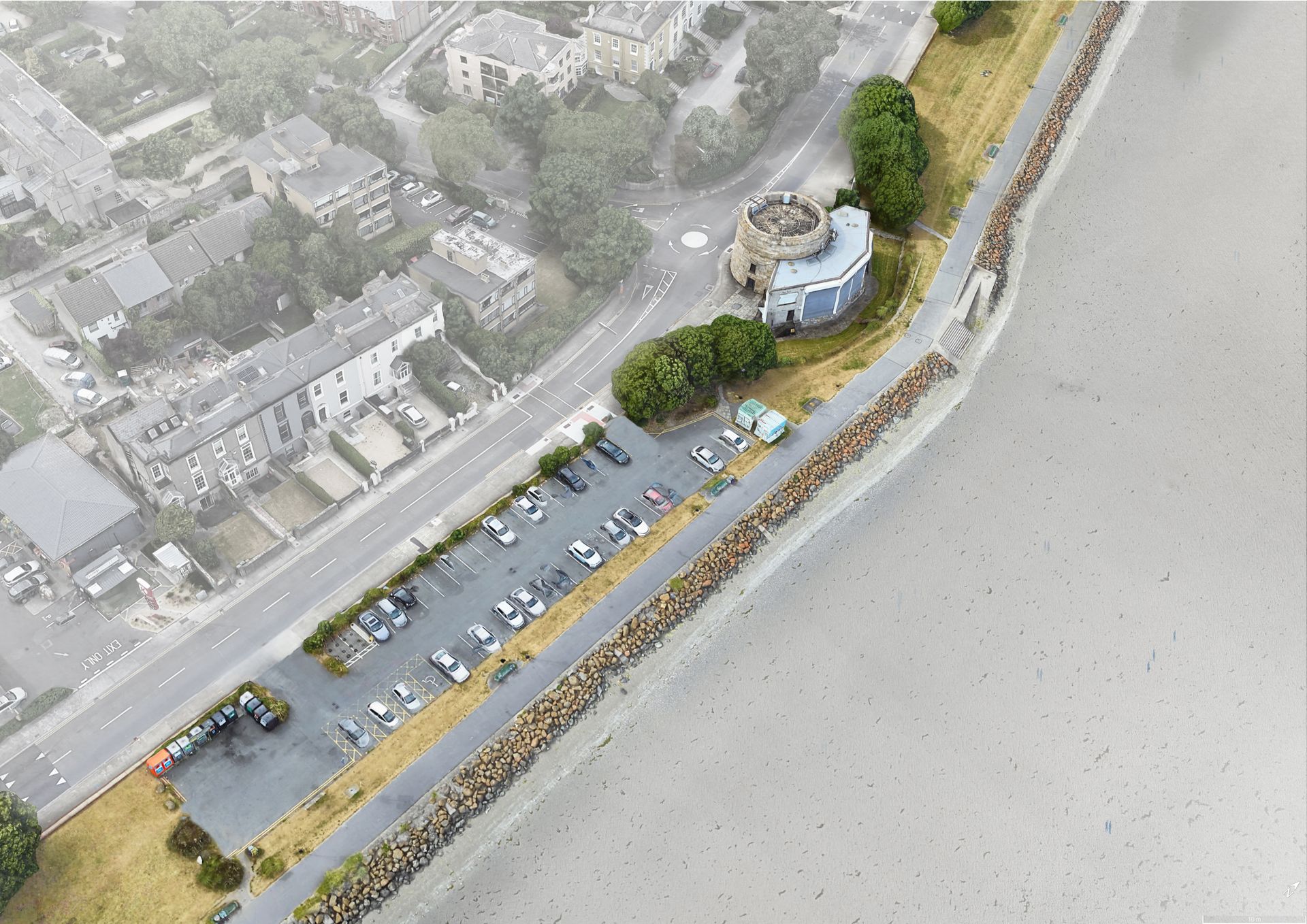
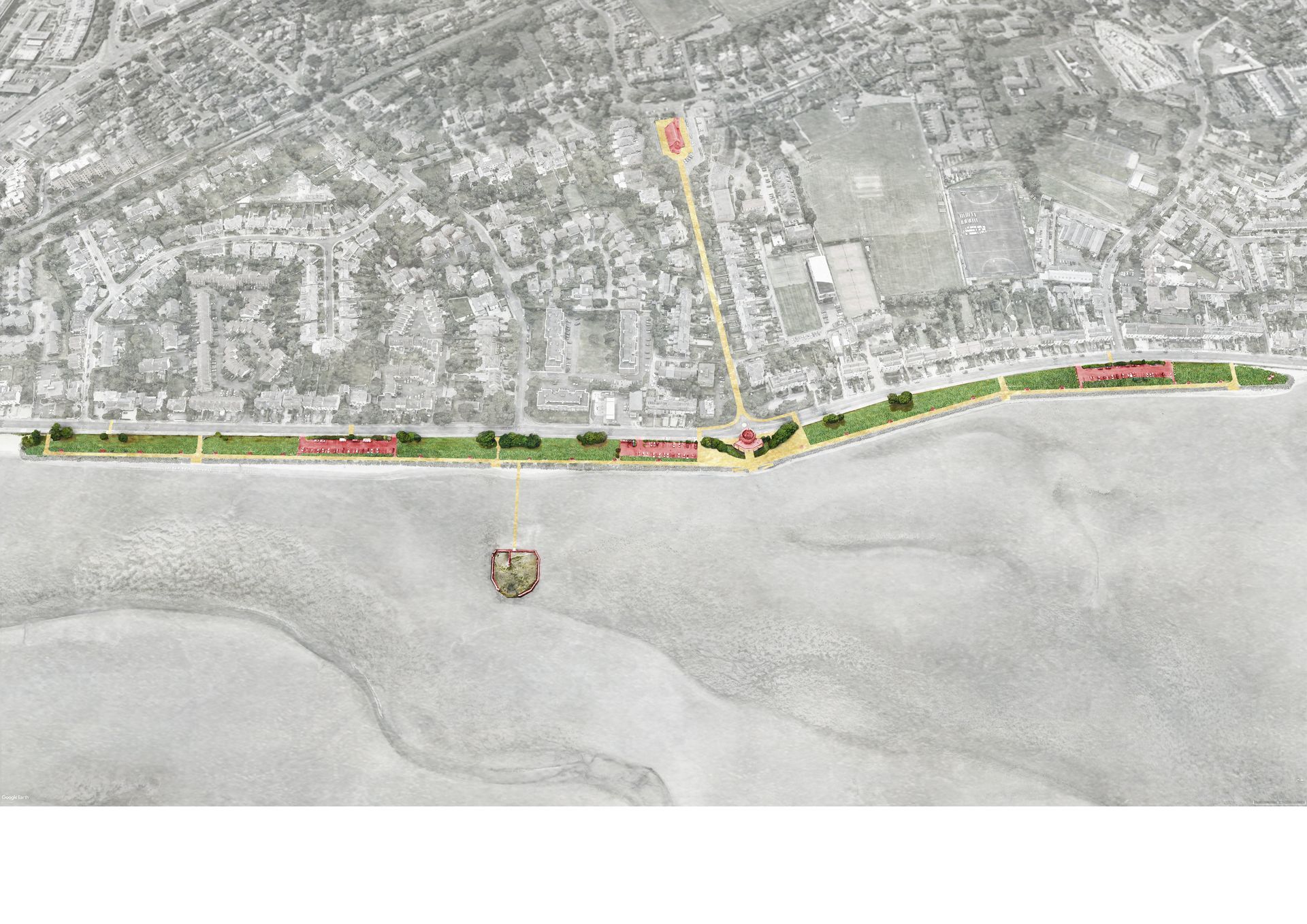
Aerial View of Martello Tower & adjacent promenade
Click pictures to enlarge