CONTEXT & POLICY
Context & Policy Background
The 2011 Sandymount Village Design Statement, the 2015 designation of Dublin Bay as a UNESCO Biosphere, and the City Development Plan 2022-2028, adopted by Dublin City Council in November 2022, provide important context and policy support for the project.
The
Sandymount Village Design Statement
created a shared vision, and formulated design principles for future development. The intention was to develop a programme of development projects which the community wanted to see implemented to achieve their shared vision. The Village Ideas project takes this Statement to the next stage and sets out a series of new practical opportunities to enhance the public realm and amenities in Sandymount.
Satellite View of Sandymount, 2024 SAMRA area outline in red
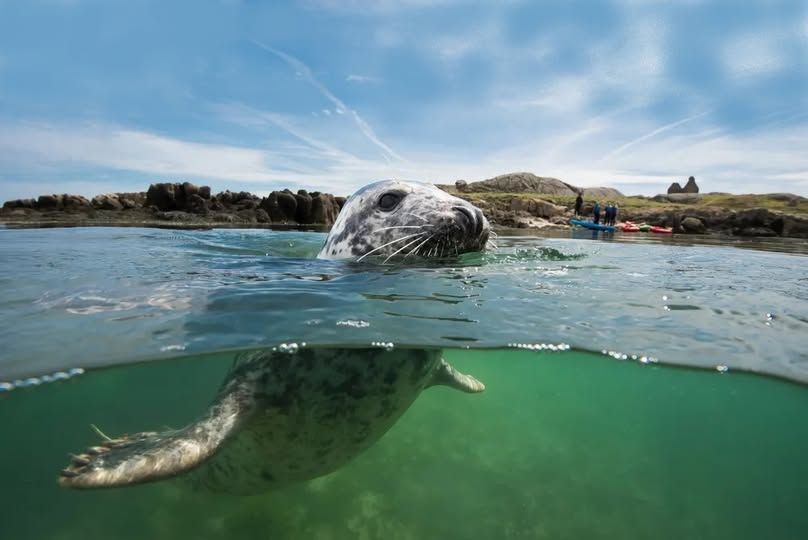
Sandymount Strand is part of Dublin Bay’s UNESCO Biosphere by UNESCO
The designation of Dublin Bay as a Biosphere by UNESCO, to quote Dublin City Council, ‘acknowledges the value of the Bay and its environs to Dublin City. It recognises the biodiversity of the area, as well as the economic, cultural and tourism importance of this biodiversity, and the need for an ecologically sustainable economic model for the Biosphere. It is an important opportunity in the development of Dublin as a ‘Living Bay’ and a green tourism destination’. The Village Ideas project seeks to build on that opportunity.
SAMRA actively contributed to the Dublin City Council City Development Plan 2022-2028 at the various public consultation stages of the drafting process. In this Plan, Sandymount is listed for the preparation of a Local Environmental Improvement Plan, a so called LEIP, to be prepared by Dublin City Council, a master plan, a local strategy plan by the local DCC area committee, to inform policy and investment on a local scale.
Also in the Development Plan, Sandymount is defined as a Key Neighbourhood “in a city of key neighbourhoods”. Dublin City Council’s policy encourages neighbourhood development in these areas “which protects and enhances the quality of our built environment and supports community health and wellbeing”.
The ideas set out in this website are consistent with these plans and policies, and will contribute constructively and positively towards the generation of Dublin City Council’s Local Environmental Improvement Plan. They will also inform its Key Neighbourhood policy.
Based on the above and in line with its aims, SAMRA took the initiative to undertake the Village Ideas project public realm. It established a Sub-Committee and with the receipt of grant aid from the Community Gain Liaison Committee, Grafton Architects undertook the task of creating these ideas.
To ensure that it has the best possible opportunity to succeed in the medium term and enable meaningful engagement and cooperation between the multiplicity of stakeholders, SAMRA has adopted a three-staged strategy.
Stage One is the preparation of the Village Ideas Report. It is an integrated holistic plan of ideas for the village and its environs underpinned by international best practice in village design.
Its development took 8 months and involved three phases: (i) the Research and Early Ideas Phase leading to the Initial Response from Grafton Architects, (ii) the Developed Strategy Phase and (iii) the Final Phase, the development of this Village Ideas presentation.
It was completed to a very high standard by Grafton Architects with input from SAMRA and the Sandymount Tidy Towns Community Association. It consists of creative, functional and achievable actions and deliverables, and led by the community, will provide a solid foundation for unlocking Sandymount’s potential.
These exciting ideas will become the basis for:
- The enhancement of the physical appearance, experience and functionality of the village and its environs.
- The enhancement of community amenities by improvement of the public realm.
- Creating opportunities to generate and host a variety of cultural, heritage, educational and community events which will be open to all residents and visitors alike.
- Improving the links between the village and the Biosphere, and developing the potential for understanding, appreciating and experiencing the Biosphere.
SAMRA is confident that the ideas will successfully lead to its Stage Two strategy of informing the development of future public realm projects, that are both actionable and pragmatic.
Stage Two involves a public engagement with Dublin City Council, local representatives, and the community to capture the views of all stakeholders (residents, businesses, public representatives and statutory bodies). This website is a central element of this engagement.
Stage Three will involve implementing the preferred way forward by Dublin City Council.
SAMRA is very grateful to Dublin Waste to Energy Community Gain Liaison Committee for funding the Village Ideas Project, to Grafton Architects for the commitment, enthusiasm, expertise and professionalism of its team in developing the Village Ideas and Dublin City Council for its encouragement and support in progressing these ideas.